Visiting Musee de l'Orangerie: Monet's Water Lilies and a Relaxed Museum Day
Plan a Musée de l'Orangerie visit with booking advice, Monet's Water Lilies, the Walter-Guillaume collection, accessibility and current exhibition dates.
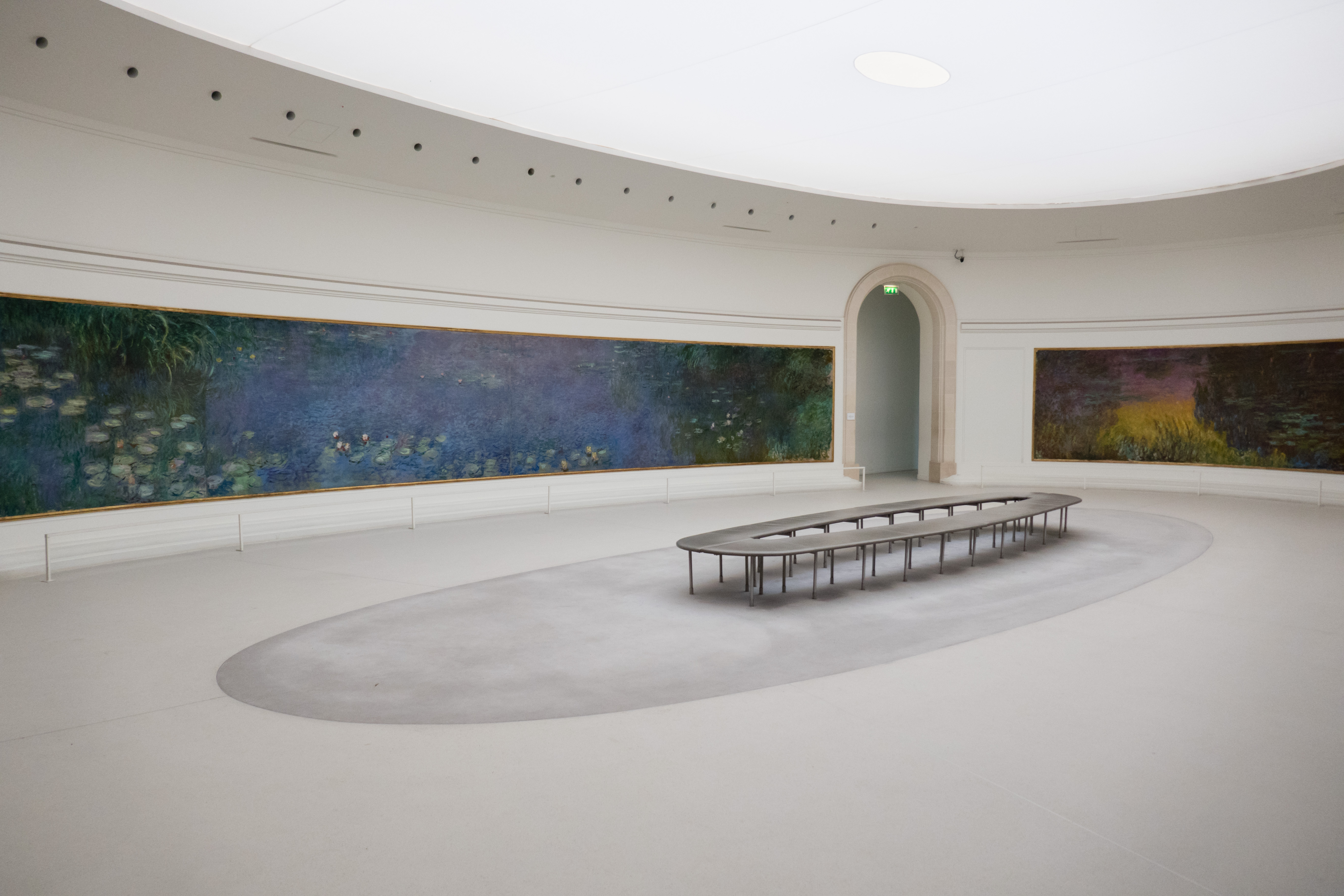
The Musée de l'Orangerie works particularly well when you want to spend time with a small number of paintings rather than make a fast circuit of a vast museum. Monet's Water Lilies occupy two purpose-designed rooms, but they are not the whole visit. The collection downstairs and the temporary exhibition programme give you reasons to stay after the familiar panoramic paintings.
This guide uses the museum's official information checked in November 2026. It covers booking, the Water Lilies rooms, the Walter-Guillaume collection and ways to combine the visit with a comfortable central Paris day. If you are still choosing between museums, read our Musée d'Orsay guide alongside this one: the two visits offer different scales and experiences.
Reserve a time and check the day's notices
The museum's website strongly recommends reserving a time online and warns that even priority access can involve waiting during busy periods. Use its own ticketing link, rather than assuming that a third-party promise of immediate entry removes every queue. Make the booking before organising a meal or another timed visit around it.
There is a specific notice for Monday, 9 November 2026: the second Water Lilies room closes at 5 pm. If both rooms are your priority that day, book early enough to see them before that closure. For later dates, check the current notices again. A museum can be open while part of the experience you came for is temporarily unavailable.
A free-admission day is also not the same as an unrestricted drop-in visit. The museum states that an online time slot is mandatory on its free first Sundays. Check the conditions attached to your chosen ticket, including eligibility for concessions, rather than using an older price or admission rule found elsewhere.
Choose a realistic arrival time
The current visitor page lists normal opening from 9 am to 6 pm, with Tuesday closure. On ordinary closing days, last admission is 5.15 pm and galleries begin closing at 5.45 pm. Those are different deadlines: a ticket near the end of the afternoon does not provide a full-length visit.
Friday late openings extend to 9 pm during exhibition periods, with separate final-entry arrangements. Check that the particular Friday you want is included. An evening visit can fit neatly after a relaxed afternoon, but it should not be assumed from the word “Friday” alone.
The museum is in the Tuileries Garden near Place de la Concorde, on the Seine side. Concorde station is listed for Métro lines 1, 8 and 12. Leave time for the walk from the station or taxi drop-off to the actual entrance. The Paris neighbourhood guide helps put this part of the Right Bank in context when choosing accommodation.
See the Water Lilies as a room-sized experience
The museum's history of the Water Lilies cycle explains that Monet offered the work to France after the First World War. The installation opened in 1927, a few months after his death. The paintings and the surrounding rooms were conceived together, so their setting matters as much as any individual detail.
The building history describes eight large compositions, each two metres high, arranged around two oval rooms. Monet worked on the architectural design with Camille Lefèvre. The layout gives visitors space to move, sit and change their distance from the painted surfaces.
Begin from somewhere you can see a broad stretch of the painting. Then move closer to examine a smaller area before stepping back again. The same passage of colour can read differently at each distance. There is no need to identify every reflection or plant before enjoying the work; the changing relationship between surface and space is part of the appeal.
Allow both rooms their own time. A photograph from one doorway cannot stand in for the second room, and a quick lap often misses the difference between looking while walking and looking while still. Choose a place to pause without blocking other visitors, and keep conversation quiet in keeping with the museum's request for these galleries.
Leave room for the Walter-Guillaume paintings
The Walter-Guillaume collection broadens the visit beyond Monet. The museum describes a collection spanning the 1860s to the 1930s, with artists including Cézanne, Renoir, Matisse, Picasso, Modigliani and Soutine. Treat the collection's catalogue as an introduction, not a guarantee that every named work will be on display on your date.
Its history is closely tied to the art dealer Paul Guillaume and to Domenica, his widow, who later married Jean Walter. The collection changed through acquisitions and selections before reaching the French state. Knowing that it grew through particular collectors' choices makes it more interesting than approaching it as a complete survey of modern painting.
Pick two or three artists that interest you, then leave space for an unfamiliar picture to hold your attention. If the Water Lilies were your main reason for coming, you can still make this a focused second part rather than feeling obliged to inspect every label. A shorter, attentive visit is often more rewarding than continuing after your concentration has gone.
Check what the temporary exhibition adds
For visits during the current season, Monet, painting time is scheduled from 30 September 2026 to 25 January 2027. Check the exhibition page and ticket conditions for your own dates. A temporary programme can change how long you want to stay and which part of the visit you give priority.
Do not let an exhibition title become an automatic addition to an already full afternoon. Decide whether you want the permanent collection, the special exhibition or both, and leave enough energy for the choice. If your interest is mainly Monet, the exhibition may be a useful reason to protect more time here instead of adding another museum that day.
Use the services that make the visit easier
The museum's services page lists an elevator serving the museum route, a cloakroom and loans of wheelchairs, folding seats and canes on presentation of identification. A sensory bag containing items such as noise-cancelling headphones is also available. Ask staff about what is available when you arrive rather than pushing through discomfort.
Visitors with disabilities should consult the separate access information. It identifies the reduced-mobility entrance to the left of the main entrance and explains admission arrangements for a support person. If arriving with additional companions, organise their tickets so the group can enter together.
Finish with space for a break, rather than a sprint to the next entrance. A walk in the Tuileries can provide a useful change of pace when conditions allow. Save the Louvre for a separate substantial visit, or adapt our three-day itinerary to give the Orangerie its own unhurried place in the trip.
Information checked 5 November 2026. Photograph: Brady Brenot (Crustacean Soup) / Wikimedia Commons, CC BY-SA 4.0. One of the Water Lilies rooms at the Musée de l'Orangerie, photographed in September 2017. Resized and displayed with responsive cropping; the photograph and displayed crop remain under the same licence.

Helena Rubinstein
Destination SpecialistHelena is the discerning eye and storytelling voice behind LuxuryVacations.net. With a background in boutique-hotel consulting and a passport stamped on six continents, she curates insider guides to the world's most coveted destinations.
Read more from Helena